




Canada is expanding government support for strategic industries as US trade restrictions accelerate efforts to strengthen domestic manufacturing, protect employment and diversify the country’s economic relationships.
According to an October 21 announcement by the governments of Canada and Ontario, the two governments have introduced C$8.7 billion in investments and measures targeting sectors affected by American tariffs, including steel, automotive manufacturing and critical minerals.
The package illustrates how trade tensions are influencing Canada’s industrial priorities.
Rather than relying exclusively on negotiations to restore predictable access to the American market, policymakers are seeking to reinforce production capacity within Canada.
Steel at the Centre of the Response
Steel is one of the industries most directly exposed to trade restrictions.
Canadian producers depend on access to international markets, particularly the United States, while also facing competition from imported products.
The federal and Ontario governments announced a Joint Steel Action Fund backed by C$3.55 billion in federal commitments and C$1.67 billion from Ontario over five years.
The initiative is intended to strengthen competitiveness and support the industry’s adaptation to changing trade conditions.
The governments also plan to establish a joint task force to coordinate measures affecting steel producers.
The approach reflects a recognition that tariffs can affect investment decisions, employment and the long-term viability of industrial facilities.
Automotive Manufacturing Under Pressure
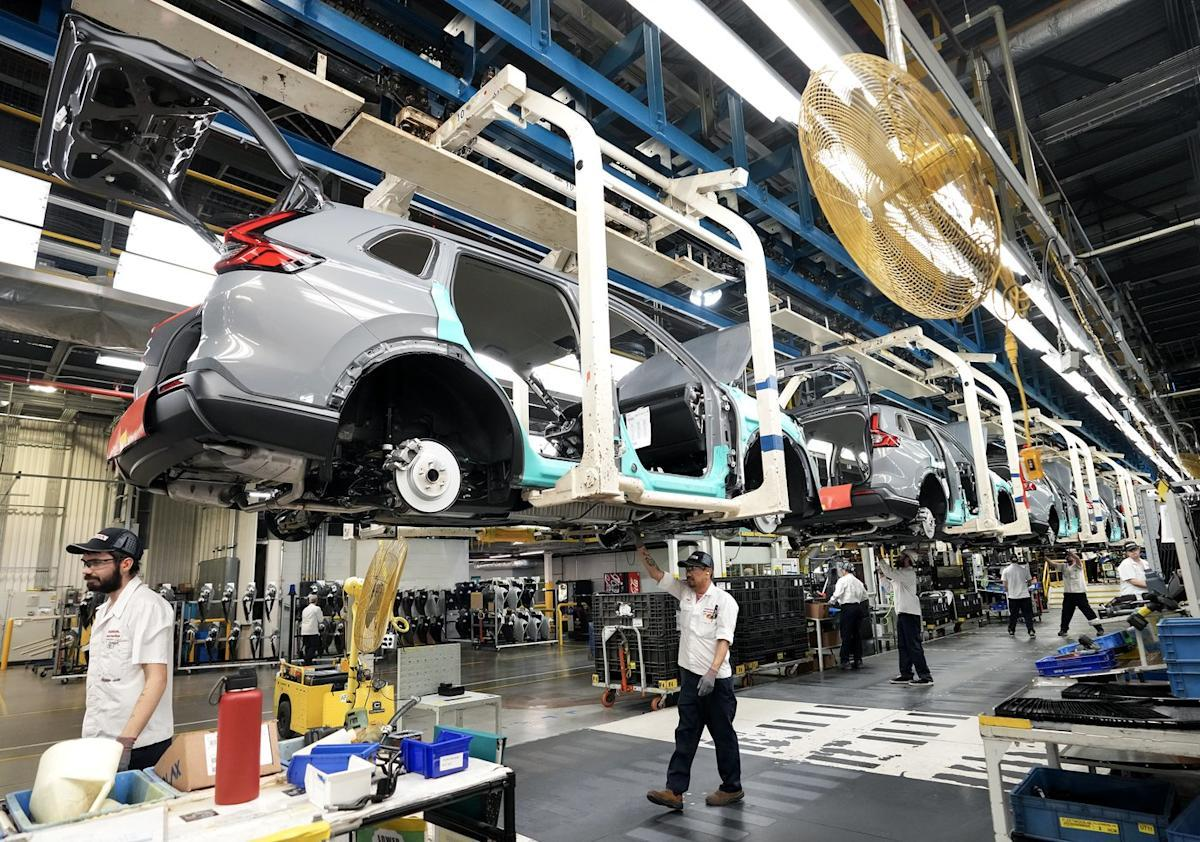
Canada’s automotive industry is deeply integrated with the United States.
Vehicles and components often cross the border several times during production.
Trade restrictions can therefore increase costs and complicate investment decisions across the supply chain.
The new federal–provincial package includes an additional C$2.5 billion over two years for major automotive capital projects.
The funding is intended to help manufacturers adapt to changing economic conditions and maintain production capacity.
The governments also announced regulatory measures designed to provide manufacturers with additional flexibility.
The objective is to preserve Canada’s position in automotive manufacturing while preparing the sector for technological change.
Critical Minerals and Economic Security
The strategy extends beyond traditional manufacturing.
Canada is seeking to strengthen supply chains for minerals used in batteries, clean technologies and advanced industrial products.
The federal government committed up to C$1 billion over three years toward road infrastructure in Northern Ontario’s Ring of Fire region.
Improved transportation links could make mineral development more commercially feasible.
However, infrastructure construction and mining projects will still require regulatory approvals, financing and engagement with affected Indigenous communities.
The initiative reflects a broader effort to connect resource development with domestic industrial capacity.
Diversification Without Disengagement
Canada’s response to American tariffs does not mean that economic integration with the United States is ending.
The geographic proximity of the two countries and the scale of their existing commercial relationships remain major advantages.
However, repeated trade disputes have increased the perceived risks of depending heavily on one market.
Diversification can involve developing export opportunities in Europe and Asia, encouraging domestic processing and strengthening Canadian supply chains.
Such changes require time and investment.
Government support can help companies adjust, but it cannot guarantee that every project will become commercially successful.
The Long-Term Test
Canada’s industrial strategy will ultimately be judged by its results.
Important measures will include private investment, productivity growth, job retention and the development of competitive supply chains.
Public funding may provide temporary protection from trade shocks, but long-term competitiveness depends on innovation, infrastructure, skilled workers and access to markets.
The latest Canada–Ontario package represents a substantial intervention in strategic industries.
Its significance lies not only in the amount of funding announced but also in the shift toward treating industrial capacity as an economic security priority.
As trade uncertainty persists, Canada’s challenge will be to protect existing industries while building a more diversified and resilient economy.