




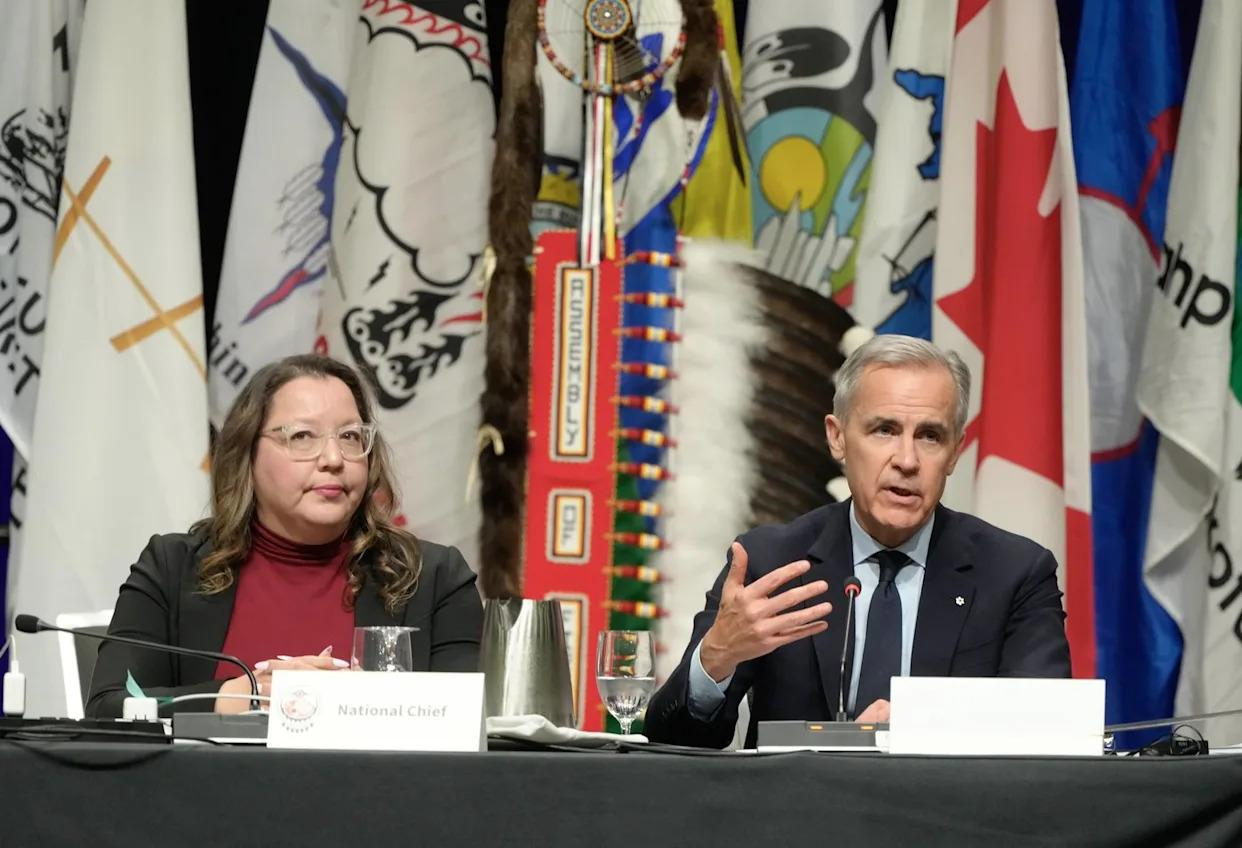
Canadian Prime Minister Mark Carney has signalled a willingness to fundamentally reconsider the Indian Act, a longstanding federal law governing many aspects of First Nations life, while stressing that any reform process must be shaped by Indigenous communities rather than imposed by Ottawa.
According to The Canadian Press, Carney clarified on Tuesday that the federal government’s review would not necessarily result in the abolition of the legislation. He said the process would have no predetermined outcome and would involve consultations with First Nations and provincial governments.
His comments followed a meeting in Ottawa on Monday involving federal and provincial leaders alongside First Nations representatives. The discussions addressed economic development, Indigenous rights, public services and the future relationship between Indigenous communities and the Canadian government.
The Indian Act, introduced in 1876, remains one of Canada’s most controversial pieces of legislation. It gives the federal government extensive authority over matters affecting First Nations, including aspects of legal status, reserve lands and community governance.
Although the legislation has undergone numerous amendments, critics argue that its underlying structure reflects a colonial system that continues to restrict Indigenous self-determination.
A Debate Over Repeal and Reform
During Monday’s meeting, Manitoba Premier Wab Kinew called for the abolition of the Indian Act, adding momentum to a debate that has continued for decades.
Carney expressed openness to moving beyond the legislation but emphasized that First Nations must play a central role in determining what should replace it.
The distinction is important because Indigenous leaders do not necessarily share a single position on the law’s future.
While many regard the Indian Act as outdated and restrictive, some caution that eliminating it without adequate legal protections and negotiated alternatives could create uncertainty around existing rights and federal obligations.
The government’s approach will therefore need to address both the demand for greater autonomy and concerns about preserving protections that communities currently rely upon.
Economic Development and Indigenous Participation
The discussions also extended beyond legal reform to the question of economic opportunity.
In a statement released Monday, the Prime Minister’s Office announced plans to explore the creation of a First Nations Sovereign Wealth Fund that could allow Indigenous communities to share more directly in the economic benefits of major infrastructure projects.
The government also committed to expanding the lending authority of the First Nations Finance Authority, potentially improving access to capital for community-led development.
Ottawa announced $260 million over four years for a new Partnerships for Indigenous Workforce Readiness Fund, intended to help Indigenous workers access employment opportunities connected to major projects.
These initiatives form part of a broader effort to strengthen economic partnerships between First Nations and federal and provincial governments.
A Test of Reconciliation
The debate over the Indian Act is closely connected to Canada’s broader reconciliation commitments.
For generations, Indigenous communities have called for greater control over their institutions, territories and economic futures.
The latest discussions suggest that Ottawa is prepared to reconsider elements of the existing legal framework, although no replacement legislation or timetable for abolishing the Indian Act has been announced.
For Carney’s government, the challenge will be translating political commitments into a process that respects the diversity of First Nations perspectives and produces tangible improvements in people’s lives.
The coming months will show whether the renewed dialogue leads to meaningful legislative proposals or remains an initial step in a much longer national debate.