





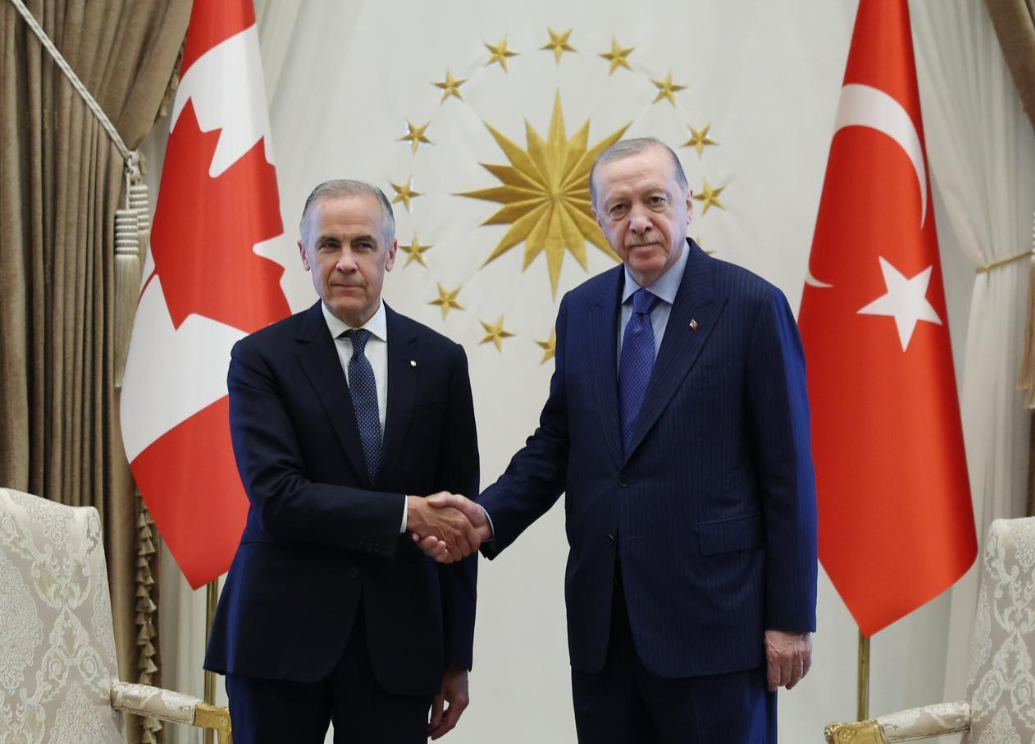
Canada and Türkiye have formally launched a strategic partnership aimed at expanding economic cooperation, strengthening defence industries and developing new opportunities in energy and investment.
According to a joint statement issued by Canadian Prime Minister Mark Carney and Turkish President Recep Tayyip Erdoğan on October 22, the partnership is supported by a three-year action plan covering trade, energy, security and diplomatic cooperation.
The announcement followed talks in Ankara during the first dedicated bilateral visit to Türkiye by a Canadian prime minister.
The two governments agreed to work toward a comprehensive free trade agreement, expand investment in priority industries and strengthen collaboration between export agencies.
A first round of trade negotiations is scheduled to take place in Ankara from November 30 to December 4, 2026.
The agreement reflects Canada’s efforts to diversify international economic relationships at a time of uncertainty in global trade.
Türkiye represents a significant potential partner because of its industrial capacity, strategic location and membership in NATO and the G20.
Bilateral merchandise trade reached C$4.3 billion in 2025, according to the Canadian government.
Energy cooperation is a major component of the new partnership. The two countries agreed to pursue opportunities involving liquefied natural gas, civilian nuclear technology, renewable energy and critical minerals.
They also announced closer defence industry cooperation through a memorandum of understanding designed to connect Canadian and Turkish companies.
The governments expanded their air transport agreement, increasing the permitted number of weekly passenger flights from 12 to as many as 21 per country while allowing unlimited cargo services.
Carney also announced plans for a Canadian trade mission to Türkiye in 2027.
The strategic partnership does not mean that all proposed projects have secured financing or commercial contracts. Its practical impact will depend on subsequent negotiations, investment decisions and implementation.
For Canada, the initiative represents another step toward reducing the economic risks associated with dependence on a limited number of trading partners.
For Türkiye, the partnership could improve access to Canadian energy resources, advanced technology and industrial expertise.
The coming months will provide the first indication of whether the diplomatic agreement can generate substantial commercial results.