





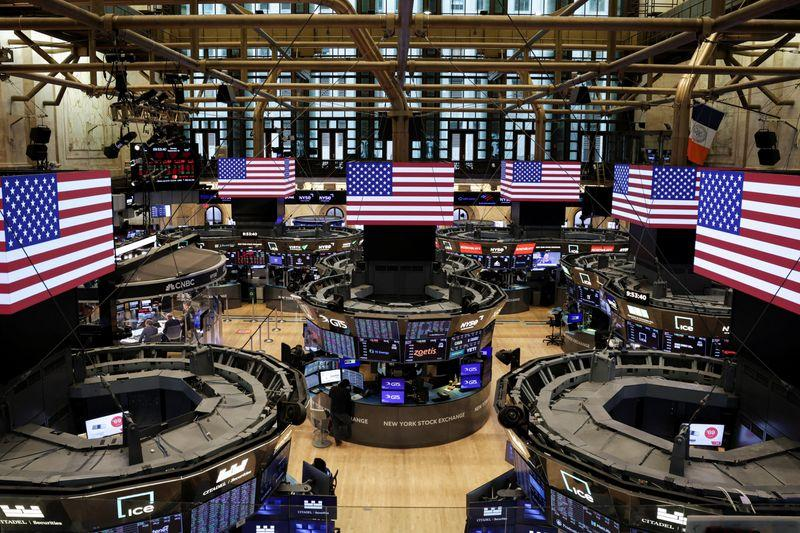
Wall Street is entering a crucial week as investors prepare for earnings reports from major technology companies and a new Federal Reserve interest rate decision, with growing attention focused on whether massive investments in artificial intelligence can deliver sustainable profits.
According to Reuters reporting published Monday, October 26, roughly one-third of the companies in the S&P 500 are scheduled to release quarterly earnings this week, including technology giants Alphabet, Microsoft and Amazon.
Their results are expected to provide fresh insight into the financial impact of artificial intelligence, an industry that has attracted enormous investment in data centres, computing infrastructure and advanced software.
Investors are increasingly examining whether strong demand for AI services can translate into higher revenue, stronger profit margins and positive cash flow.
The shift reflects growing scrutiny of technology companies’ capital spending plans. Although artificial intelligence remains a major driver of investment, markets are becoming less willing to reward spending without clear evidence of financial returns.
Recent pressure on companies associated with AI infrastructure has highlighted concerns about the cost of financing ambitious expansion projects, particularly when borrowing rates remain elevated.
The Federal Reserve’s monetary policy announcement, scheduled for Wednesday, adds another source of uncertainty.
Investors will examine the central bank’s assessment of inflation and economic growth for indications of how borrowing costs could evolve in the coming months.
Energy prices are also influencing market sentiment. Tensions in the Middle East have increased concerns about inflation and the potential effects of higher fuel costs on businesses and consumers.
Meanwhile, the November 3 congressional midterm elections are approaching, adding political uncertainty to an already demanding period for financial markets.
For investors, the coming days will offer an important test of two interconnected questions: whether artificial intelligence can justify its extraordinary investment requirements, and whether monetary policy will allow companies to finance future growth without significantly higher costs.
The answers could shape market expectations well beyond this week’s earnings announcements.