





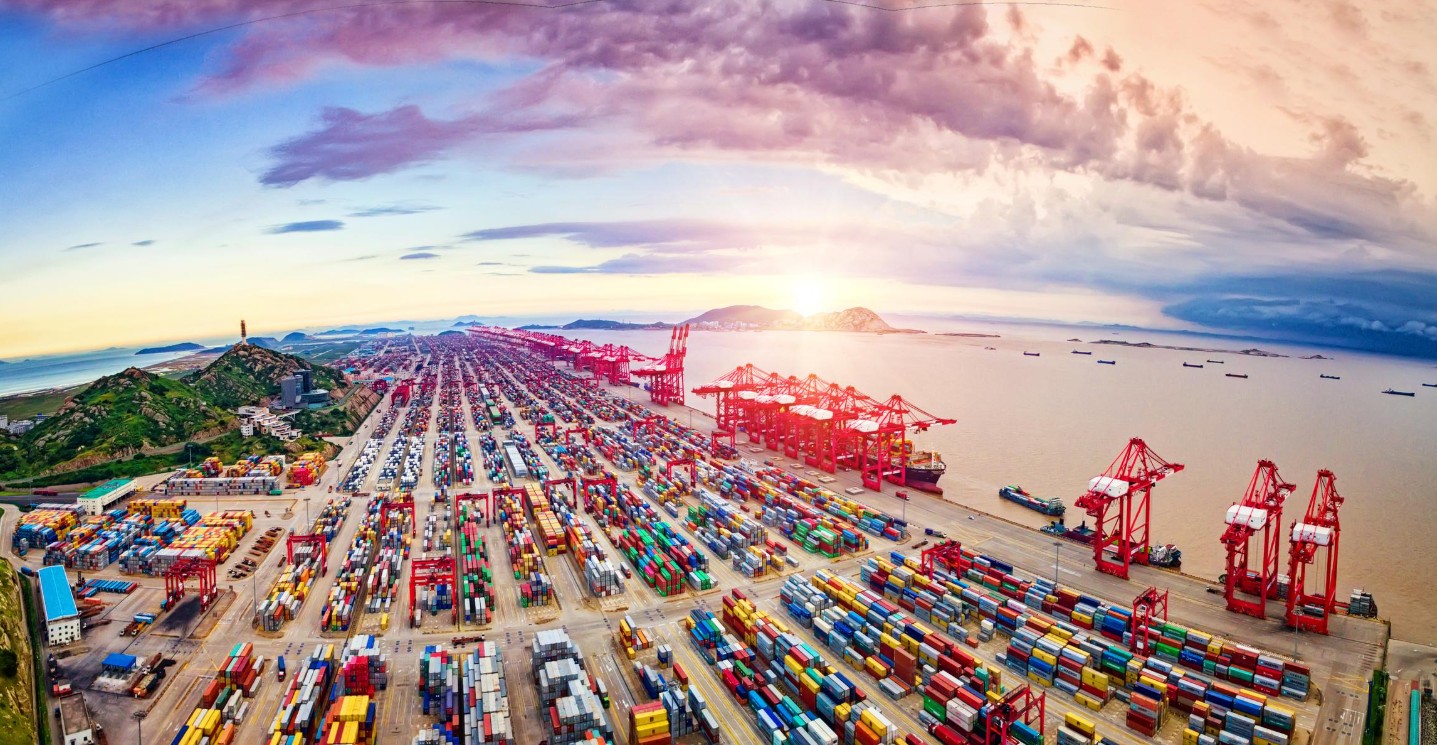
BEIJING — China’s economy accelerated in the third quarter of 2026, supported by exports and industrial production, but weak consumer spending and a prolonged property downturn continue to raise questions about the sustainability of the recovery.
According to China’s National Bureau of Statistics, figures reported by Reuters on October 19 showed gross domestic product expanding 4.5% from a year earlier, compared with 4.3% in the second quarter. The result exceeded the 4.4% growth forecast in a Reuters survey of economists.
The improvement gives Beijing some breathing room as it seeks to meet its annual growth target of between 4.5% and 5%. However, the figures also reveal an economy increasingly dependent on industrial production and overseas demand.
Exports Remain a Powerful Growth Engine
Chinese manufacturers have continued to benefit from strong demand for machinery, electronics and advanced technology products.
Investment in high-tech production and artificial intelligence-related industries has supported industrial activity, helping offset weaker demand in other parts of the economy.
Industrial output increased 5.5% in September, reinforcing the importance of manufacturing to China’s growth model.
Yet the export-led recovery carries risks. China’s trading partners are increasingly concerned about trade imbalances and the competitive pressure created by Chinese industrial output.
Further restrictions on Chinese exports could weaken one of the economy’s strongest sources of growth.
Consumers Remain Cautious
The domestic picture is less encouraging.
Retail sales increased just 1.1% in September, while investment continued to struggle, particularly in the property sector.
The prolonged real estate downturn has affected household confidence and reduced an important source of wealth for Chinese families.
When households feel uncertain about employment, property values or future income, they may choose to save rather than spend.
That behaviour makes it harder for Beijing to shift the economy toward stronger domestic consumption.
It also means that headline GDP growth may not fully reflect the economic conditions experienced by ordinary households.
Technology Cannot Solve Every Problem
China’s expanding advanced manufacturing capacity is an important competitive advantage.
However, technology-intensive industries do not necessarily generate employment at the same scale as traditional manufacturing and construction.
Automation can raise productivity while limiting the number of workers needed to produce additional output.
This creates a policy challenge: strong industrial performance may coexist with weak household demand.
For growth to become more balanced, higher productivity must eventually translate into stronger wages, greater consumer confidence and broader economic opportunities.
Global Consequences
China’s economic trajectory matters well beyond its borders.
Stronger Chinese industrial exports affect competition in Europe, North America and emerging markets. Meanwhile, weaker Chinese consumption can reduce demand for imported products and commodities.
For Canada, these developments carry mixed implications.
Demand from Chinese industry can support some commodity markets, while competition from Chinese manufacturers can place pressure on Canadian producers.
Trade restrictions and geopolitical tensions add another layer of uncertainty.
A Recovery Still Searching for Balance
The third-quarter figures show that China’s economy retains considerable strength.
But they do not establish that the country’s structural problems have been resolved.
The central test for Beijing is whether growth can become less dependent on exports and industrial investment and more supported by domestic spending.
Without that transition, China may continue posting respectable growth figures while consumers and businesses remain cautious.
The latest data therefore describe a recovery that is real, but uneven—and one whose long-term durability remains uncertain.