




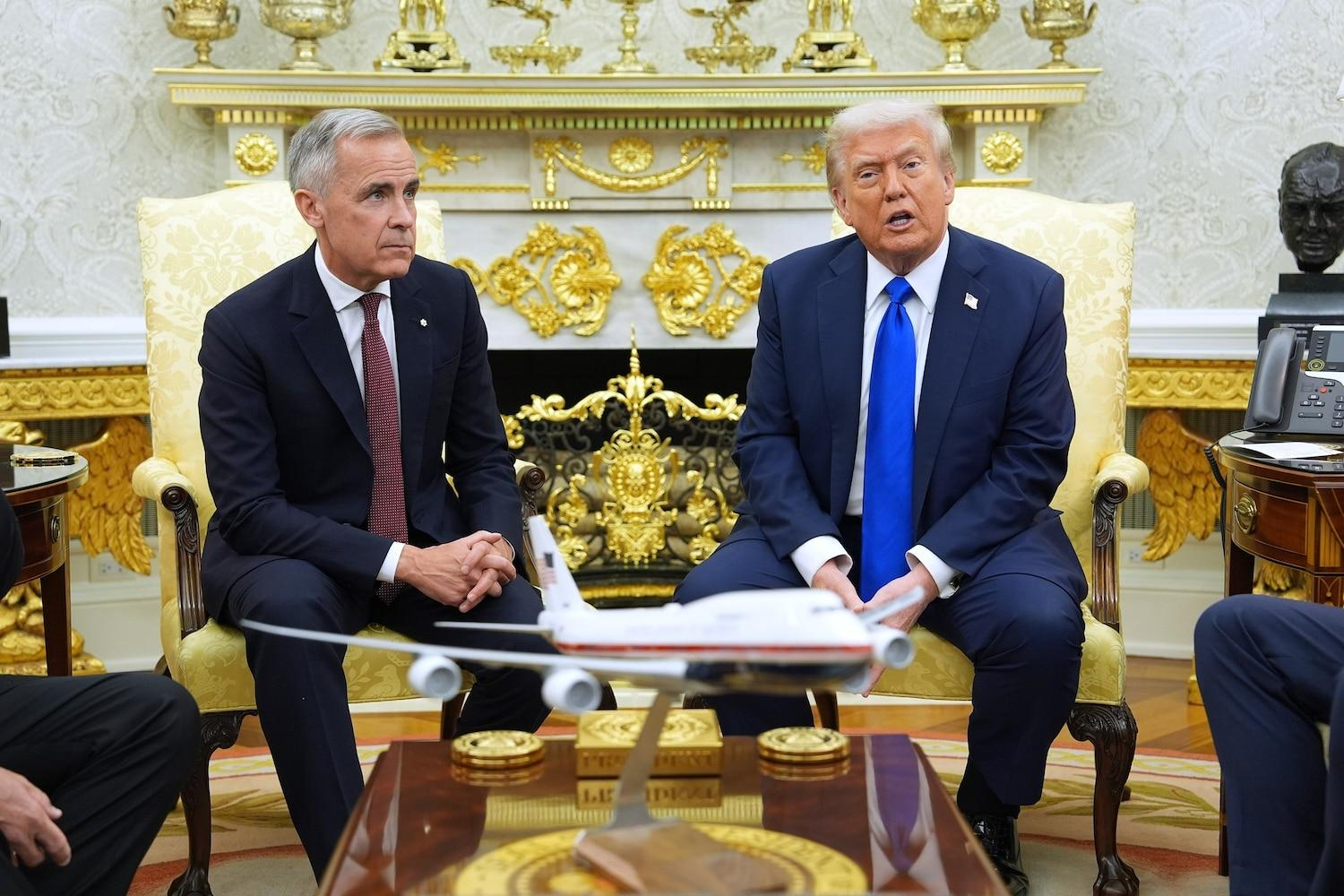
Canada and the United States are moving toward renewed trade negotiations after Prime Minister Mark Carney reported progress in discussions with US President Donald Trump, raising hopes of a possible agreement following months of tariff disputes.
According to The Associated Press, Carney said on Sunday that he had held a constructive conversation with Trump, while the US president described the two countries as having the basis for a potentially strong trade agreement.
Negotiators are expected to continue working over the coming weeks, although neither government has announced a finalized deal or a timetable for signing one.
The latest discussions follow a period of heightened tensions between Ottawa and Washington over tariffs and market access.
Trade negotiations stalled in August after Canada rejected several American demands, prompting Washington to impose tariffs on Canadian products and Ottawa to respond with retaliatory measures.
Why the Talks Matter
The United States remains Canada’s most important trading partner, making the outcome of bilateral negotiations particularly significant for Canadian exporters, manufacturers and workers.
Industries with deeply integrated North American supply chains are especially sensitive to changes in tariffs and customs rules.
For companies operating across the border, uncertainty can complicate investment decisions, pricing and long-term production planning.
Carney has indicated that recent progress reflects a greater willingness by Washington to consider Canada’s position.
However, significant differences may remain, and positive political statements do not necessarily mean that a binding agreement is close.
Economic Pressure on Both Sides
The renewed talks come at a challenging moment for the Canadian economy.
Statistics Canada reported on October 30 that real gross domestic product was unchanged in August, following another month of stagnation in July.
An advance estimate suggested that economic activity may have declined by 0.1% in September.
These figures underline the importance of restoring greater certainty to Canada’s international trading relationships.
A reduction in trade barriers could support business confidence, but any eventual agreement would need to be assessed according to its actual provisions.
What Happens Next?
The next stage will involve negotiations over the outstanding issues separating the two governments.
Businesses will be watching for details about tariffs, market access and the treatment of Canadian exports.
For now, the renewed dialogue represents diplomatic progress rather than a completed trade agreement.
Its economic significance will depend on whether the two countries can translate their discussions into enforceable commitments.