




By Noureddine Elbayar
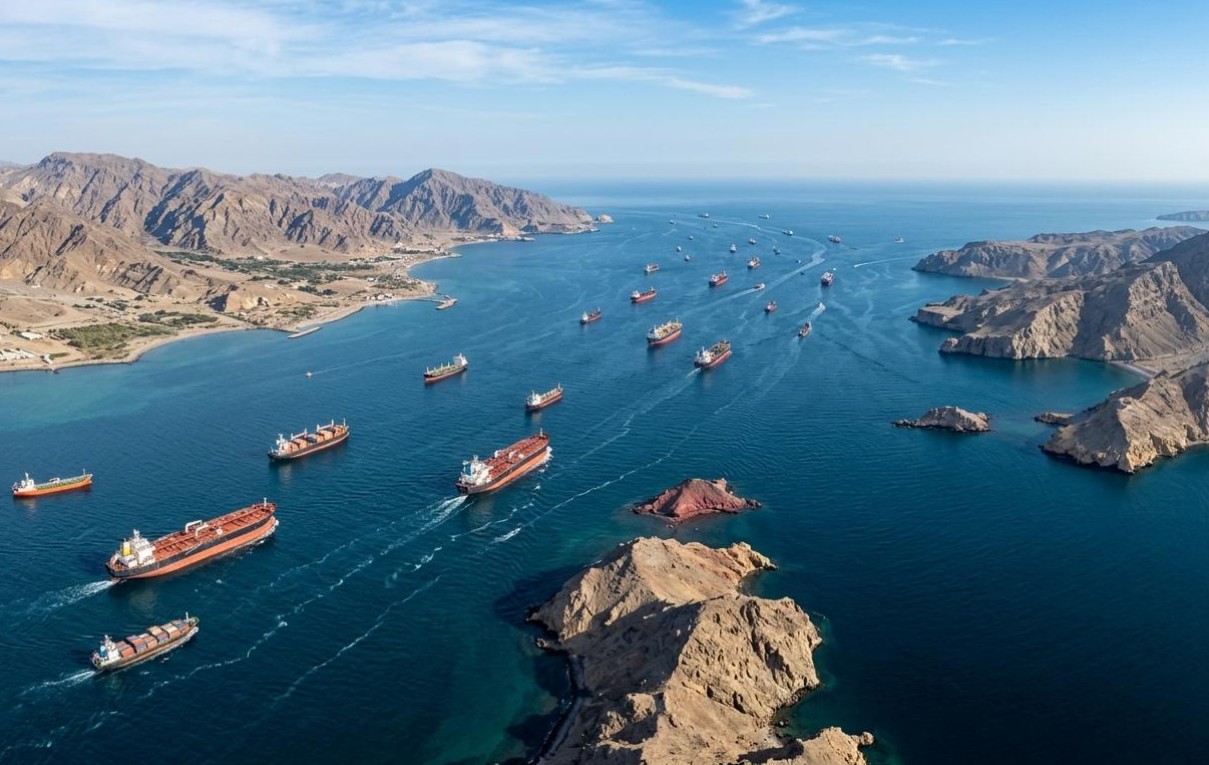
The Strait of Hormuz is more than a maritime passage connecting the Persian Gulf to international waters. It is a reminder that the global economy remains vulnerable to political and military decisions made in a relatively narrow geographical space.
The current confrontation involving Iran and the United States has exposed a fundamental weakness in international energy security: producing oil is not enough if transporting it becomes dangerous, expensive or politically contested.
For Tehran, the strait represents a source of strategic leverage. Iran does not need to control the world’s energy production to influence global markets. The possibility of disrupting shipping through Hormuz can raise insurance costs, complicate commercial decisions and increase uncertainty among importers.
Washington faces a different challenge. Its military presence and diplomatic influence may help protect navigation, but ensuring lasting stability requires more than keeping shipping lanes physically open. Energy companies, insurers and vessel operators must also believe that passage is sufficiently safe to justify commercial activity.
This distinction between military access and commercial confidence is central to understanding the crisis.
A tanker may technically be able to cross the strait, yet its operator could still decide that the financial and security risks are unacceptable. In such circumstances, the economic effects of a confrontation can extend well beyond the immediate area of conflict.
The consequences are particularly significant for Asian economies that depend on imported energy. Higher shipping costs and unpredictable deliveries can affect industrial production, transport and consumer prices, even when global oil supplies have not disappeared.
The crisis also illustrates the limits of alternative routes. Pipelines and ports outside the strait can reduce dependence on Hormuz, but they cannot necessarily replace its full commercial capacity or eliminate the costs of longer journeys.
Diplomacy therefore has an economic dimension that is often underestimated. An agreement that reduces military confrontation without restoring confidence in maritime transport may deliver only a partial recovery.
For the United States and Iran, the central question is not simply who can impose conditions on the other. It is whether either side can achieve its objectives without prolonging damage to the regional and international economy.
The deeper lesson is that global energy security depends on more than production volumes and strategic reserves. It also rests on predictable rules, reliable shipping corridors and the ability to prevent regional disputes from becoming worldwide economic shocks.
Hormuz has become a test of that international system. Its outcome will be measured not only by diplomatic declarations, but by whether ships, insurers and markets regain confidence in the passage.