




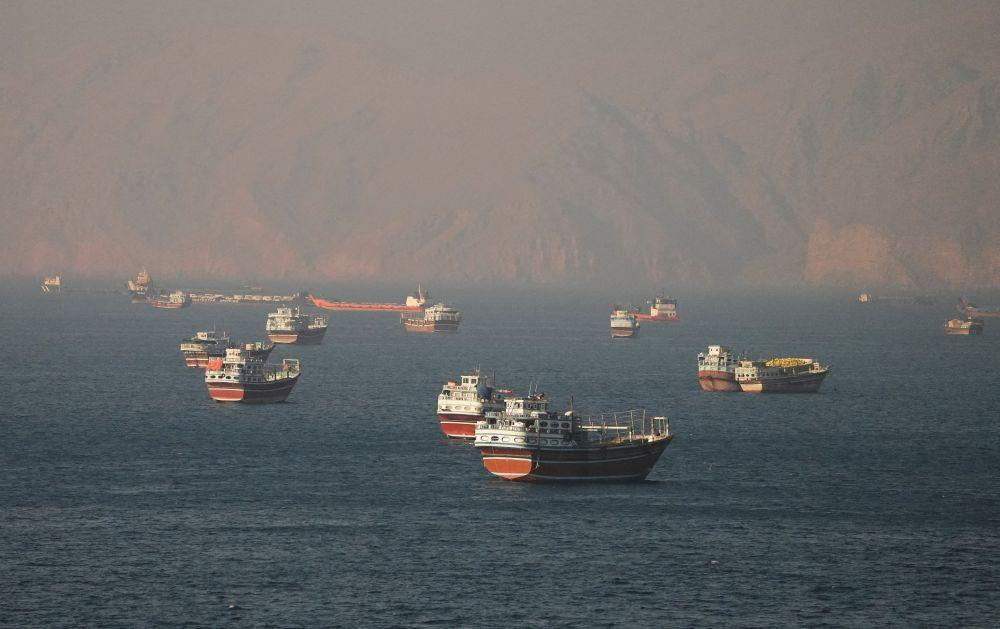
A series of reported tanker incidents in and around the Strait of Hormuz has renewed concerns about maritime security in the Persian Gulf, as conflicting accounts from Iran and the United States highlight the continuing risks facing international shipping.
According to an Associated Press report published on Friday, October 30, Iran’s Islamic Revolutionary Guard Corps said three oil tankers had been damaged after entering routes it described as unauthorized. American military officials disputed Iran’s account of naval mine threats, while independent verification of the incidents remained limited.
The developments came as Oman reported the evacuation of 25 crew members from a Panama-flagged vessel that had been attacked near its coast.
The incidents have raised fresh questions about the safety of commercial shipping through one of the world’s most strategically important maritime corridors.
Iran Reports Three Tanker Incidents
Iran’s Revolutionary Guard said two oil tankers encountered incidents while travelling through different sections of the Strait of Hormuz.
In a subsequent statement, Iranian authorities reported that a third vessel, described as a supertanker carrying more than two million barrels of oil, had caught fire following an explosion.
Iran attributed the incidents to vessels attempting to use shipping routes without its authorization.
However, the precise circumstances surrounding the reported explosions and the extent of the damage could not be independently confirmed.
The distinction is important because the competing accounts have significant implications for how governments, shipping companies and insurers assess maritime risks.
United States Disputes Mine Claims
The United States military challenged Iran’s description of the maritime threat.
Admiral Brad Cooper, commander of US Central Command, said internationally recognized primary transit routes through the Strait of Hormuz had been cleared of Iranian naval mines.
The American statement did not independently establish the causes of the incidents reported by Tehran.
The disagreement reflects broader tensions over freedom of navigation and control of commercial shipping routes.
International shipping companies depend on reliable information about maritime hazards to determine whether vessels can transit safely.
Conflicting military statements can complicate those assessments, particularly when independent investigators cannot immediately access affected vessels or incident locations.
Oman Evacuates 25 Crew Members
Oman’s Maritime Security Centre separately announced that 25 crew members had been evacuated from a Panama-flagged merchant vessel identified as RITI.
The vessel was reportedly attacked near the Omani coast.
Maritime tracking information identified it as an oil tanker.
Omani authorities confirmed the evacuation, but the available reports did not establish whether the vessel was among the three tankers mentioned in Iran’s statements.
That uncertainty underscores the need to distinguish between confirmed rescue operations and claims about the causes of separate maritime incidents.
Oman’s role is especially important because of its geographical position near the Strait of Hormuz and its longstanding involvement in regional diplomacy.
Why the Strait of Hormuz Matters
The Strait of Hormuz connects the Persian Gulf to the Gulf of Oman and the Arabian Sea.
It is a critical passage for oil and liquefied natural gas shipments from major energy-producing countries.
Disruptions to shipping can affect international energy supplies, freight costs and insurance premiums.
Even when production facilities remain operational, threats to maritime transport can prevent energy cargoes from reaching customers on schedule.
For energy-importing countries, prolonged disruption may contribute to higher fuel costs and wider inflationary pressure.
For exporters, shipping insecurity can complicate commercial operations and reduce the reliability of delivery commitments.
Canada is geographically distant from the Gulf, but Canadian consumers and businesses can still be affected by changes in global energy prices and transportation costs.
Diplomatic Efforts Continue
The tanker incidents occurred against a background of continuing diplomatic efforts to reduce regional tensions.
Qatari mediators returned to Tehran for discussions aimed at containing the conflict involving Iran, the United States and Israel.
However, the available reports did not establish that the latest diplomatic contacts had produced a formal agreement on maritime security.
The immediate challenge for regional governments remains preventing further incidents while ensuring that commercial vessels can navigate international waters safely.
Uncertainty Remains
The reported tanker explosions, the American response and the Omani rescue operation illustrate the fragile security situation around the Strait of Hormuz.
Several important questions remain unresolved, including the exact causes of the reported incidents, the identity and condition of all affected vessels, and whether additional shipping restrictions will be imposed.
The latest developments also demonstrate why independent verification is essential when governments and military organizations release competing accounts during a regional conflict.
For international shipping and energy markets, the central concern is whether maritime security conditions can stabilize sufficiently to restore confidence in one of the world’s most important trade routes.