




From the deadlock over MINURSO’s mandate to Algeria’s military deployment in Niger and competition over gas pipelines, the interests of major powers are converging in a region of growing strategic importance. But do these developments reflect a coordinated confrontation against Morocco, or competing projects to reshape influence across Africa?
By Adam Said | Geopolitical Analysis
The future of Western Sahara can no longer be viewed as a diplomatic issue isolated from the geopolitical transformations sweeping across Africa. From the Sahel to the Atlantic Ocean, questions of security, energy, ports, and trade corridors increasingly intersect as international and regional powers seek to redefine their positions in a rapidly changing strategic environment.
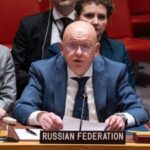
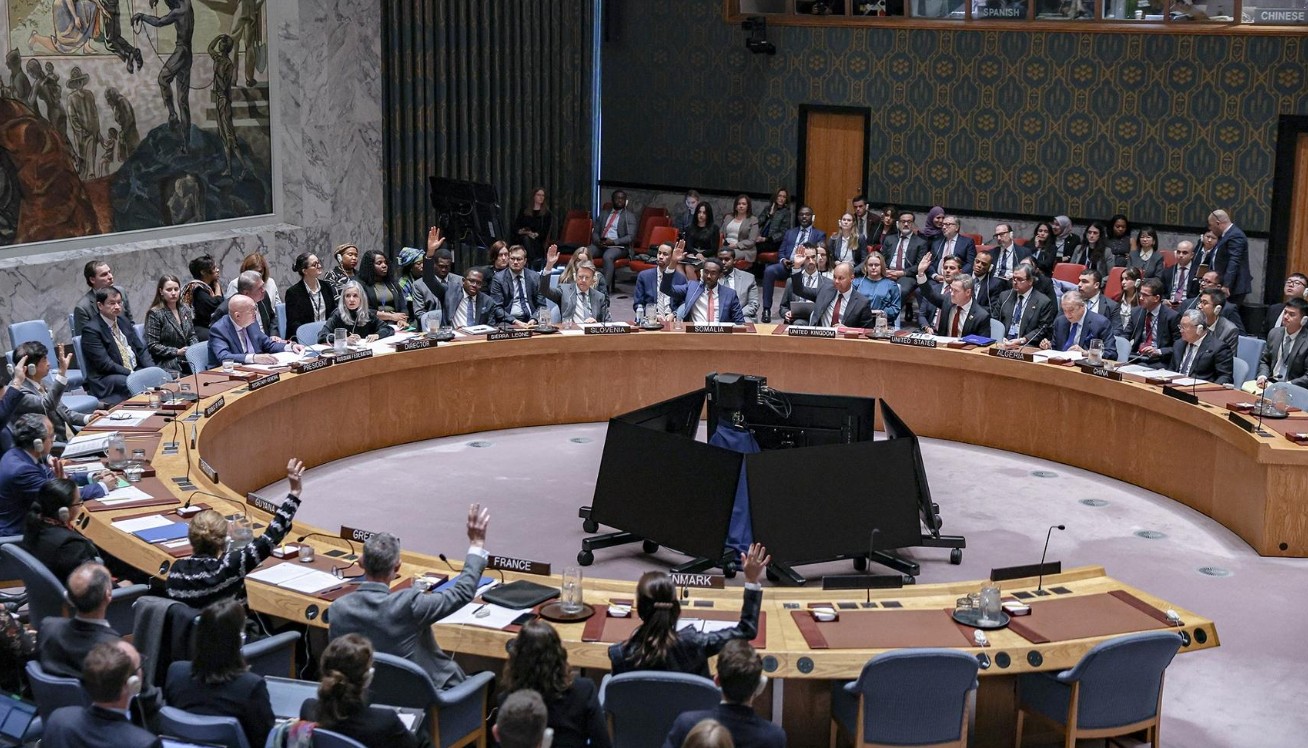
On October 30, 2026, the dispute over Western Sahara escalated into a direct confrontation between Washington and Moscow at the United Nations Security Council, after Russia used its veto against a US-drafted resolution concerning the future of the political process and the mandate of the United Nations Mission for the Referendum in Western Sahara, known as MINURSO.
Meanwhile, an alternative Russian draft failed to secure the votes required for adoption, leaving the Council facing a crisis extending beyond the customary disagreements over diplomatic language to the future of the UN mission’s presence on the ground.
Yet reducing this development to a confrontation between Russia and Morocco risks overlooking its broader dimensions. Moscow opposes Washington’s proposed framework for a settlement but continues to maintain diplomatic and economic relations with Rabat. Similarly, the convergence of Russian and Algerian interests does not necessarily establish the existence of a joint strategy directed against Morocco.
The more relevant question is whether these simultaneous developments reveal a shift in international competition—from managing political disputes toward controlling economic corridors, energy resources, and instruments of security influence across Africa.
Russia’s Veto and the Limits of Confrontation with Morocco
The Security Council vote exposed fundamental differences between the American and Russian approaches to the future of the Western Sahara dispute.
Washington sought to place Morocco’s autonomy proposal at the center of the political process while reconsidering MINURSO’s structure, name, and responsibilities. Moscow, by contrast, defended the continuation of the mission in its existing form and the preservation of a negotiating framework grounded in previous UN resolutions and the principle of self-determination.
Details of the negotiations indicate that the American draft underwent revisions before being submitted to a vote. Its initial wording was more categorical in presenting autonomy under Moroccan sovereignty as the only possible solution. Subsequent amendments introduced language emphasizing the need for agreement among the parties and respect for the principles of the UN Charter.
These details matter because they demonstrate that the disagreement was not merely about extending the mission’s mandate. It also concerned the extent to which the Security Council could predetermine the political outcome of negotiations.
For Morocco, autonomy under its sovereignty remains the framework it advocates for resolving the dispute. The Polisario Front, meanwhile, maintains its demand for the exercise of the right to self-determination, while Algeria supports a negotiating process that does not predetermine autonomy as the final outcome.
Russia’s veto does not overturn American recognition of Moroccan sovereignty over Western Sahara, nor does it automatically alter previous Security Council resolutions. It does, however, prevent the adoption of the targeted draft and forces the parties to seek a new formula if they wish to renew the mandate or modify the institutional framework of the political process.
The practical significance of the veto, therefore, lies not only in its capacity to block a resolution but also in Russia’s ability to influence the texts and diplomatic understandings that may follow.
Russia and Algeria: A Strategic Partnership Does Not Mean Identical Interests
Algeria and Russia maintain longstanding military relations built around arms agreements, technical cooperation, and political coordination. This relationship gives Moscow an important foothold in North Africa at a time of increasing Western competition for influence in the region.
However, their relationship extends beyond military cooperation.
Algeria is a major natural gas producer, while Russia is a global energy power. Their interests sometimes converge in defending the position of energy-producing countries, even though their economic circumstances and roles in European markets differ.
Such convergence, however, does not imply that the two countries share identical interests in every energy project or political development.
Algeria benefits from its established position as a natural gas supplier to Europe, while Russia continues to seek new markets and partnerships amid geopolitical restrictions affecting its energy exports.
This relationship takes on an additional dimension when considering competing projects to transport Nigerian gas toward European markets, particularly the Trans-Saharan Gas Pipeline through Niger and Algeria and the Atlantic African Gas Pipeline running through West African countries toward Morocco.
These projects may compete for financing, customers, and infrastructure investment. Yet commercial competition alone is insufficient to establish coordinated Russian-Algerian efforts to undermine the Moroccan route.
Turning overlapping interests into an allegation of a joint strategy requires documents, agreements, or independent evidence—not merely simultaneous political positions and regional developments.
The Atlantic African Gas Pipeline: A Project Beyond Energy Transportation
The Atlantic African Gas Pipeline represents one of the most significant economic initiatives being developed by Morocco and Nigeria, with the potential to connect West African energy markets to North Africa and Europe.
In July 2026, the project recorded an institutional development through the signing of an intergovernmental agreement within the framework of the Economic Community of West African States (ECOWAS).
This marked progress in coordination among the countries concerned, but it did not mean that financing had been completed or that operations had begun.
Planning estimates describe a pipeline stretching thousands of kilometers, with a targeted transport capacity of approximately 30 billion cubic meters annually and an investment cost running into tens of billions of dollars.
These figures remain planning estimates dependent on engineering, financing, and implementation. They should not be interpreted as existing operational capacity.
The project’s strategic importance extends beyond delivering natural gas to Europe.
If implemented, it could offer participating countries opportunities to expand electricity generation, industrial development, and infrastructure investment.
For Morocco, the pipeline could reinforce its position as a link between African economies and European markets while adding an energy dimension to its Atlantic infrastructure.
The competing Trans-Saharan Gas Pipeline follows a different route, connecting Nigeria to Algeria through Niger and potentially benefiting from Algeria’s existing export infrastructure.
This creates genuine economic competition between two possible corridors, but it is not necessarily a zero-sum contest.
Changes in European and African demand, available financing, and the requirements of gas-producing countries could allow both projects to advance at different speeds.
Ultimately, their prospects will depend less on political endorsements alone than on the ability to secure long-term contracts, attract investment, and ensure stability along their routes.
Algeria’s Military Presence in Niger: Protecting Interests or Reshaping Regional Influence?
Algeria’s military deployment in Niger has introduced another dimension into the regional equation.
Following the Algerian parliament’s approval on October 25 of the deployment of military units to northern Niger, Reuters reported on October 30 that the first Algerian military convoy had arrived in the country.
The development signaled a shift in security cooperation between the two countries toward a more direct operational presence.
Algeria presented the protection of its economic and energy interests as one justification for the deployment, particularly in connection with investments and projects that include the proposed Trans-Saharan Gas Pipeline.
Yet Niger is more than a potential transit country for a future pipeline.
It faces complex security challenges, including armed groups affiliated with al-Qaeda and the Islamic State, alongside political tensions that have affected the Sahel following military coups in several countries.
Algerian-Nigerien military cooperation can therefore also be interpreted as an effort to protect borders, safeguard economic projects, and respond to shared security threats.
Nevertheless, the deployment raises a strategic question beyond its stated objectives: will it remain limited in size, duration, and mission, or evolve into a longer-term security presence that increases Algeria’s influence over regional balances in the Sahel?
Answering that question requires reliable information about troop numbers, deployment agreements, operational locations, and rules of engagement—details that the publicly available information does not yet establish conclusively.
There is also no documented evidence that the Algerian deployment directly targets Morocco’s Atlantic pipeline project.
It is nevertheless reasonable to assess that a stronger Algerian security presence in Niger could reinforce Algeria’s position along one of the potential energy corridors connecting West Africa to the Mediterranean.
Mauritania: An Economic Partner at the Center of Regional Balances
If Niger represents a crucial transit point for the Algerian pipeline route, Mauritania occupies a central position in the Atlantic project.
Its geographic location between Morocco and West Africa, combined with its extensive Atlantic coastline, makes it an important participant in plans to connect African markets with Atlantic ports and energy networks.
Nouakchott seeks to benefit from this position through infrastructure development, trade, and investment while maintaining relations with both Rabat and Algiers.
It is important, however, not to portray Mauritania merely as an arena of competition between its neighbors.
Mauritania is a sovereign state with independent interests and its own economic and security priorities.
Progress in Atlantic connectivity could expand trade and investment opportunities among Morocco, Mauritania, and West African countries, but the realization of these benefits depends on financing, infrastructure, and implementation agreements.
From a broader perspective, the success of any new regional economic corridor will depend not only on relations among major powers but also on whether African countries themselves see tangible benefits in participating.
Russia in Mali and the Sahel: Military Influence Does Not Automatically Create Atlantic Access
Russia has become an increasingly significant security actor in Mali in recent years, benefiting from the reduction of France’s military presence and the Malian authorities’ turn toward alternative international partners.
This presence has enabled Moscow to strengthen relations with Sahel governments and connect military cooperation with political and economic opportunities.
Military influence, however, does not automatically translate into economic or geographic control.
Mali is landlocked. Any sustainable Russian access to Atlantic ports would require arrangements with coastal countries or the development of cross-border trade corridors.
Morocco’s Atlantic initiative for Sahel countries, meanwhile, is based on the idea of providing landlocked states with access to the ocean through Moroccan infrastructure and transport and trade partnerships.
The distinction highlights two different instruments of regional influence: one emphasizing military and security cooperation, the other economic and logistical connectivity.
Yet it would be mistaken to assume that these approaches must always conflict or that African countries are required to choose between them.
Some governments may seek to combine security partnerships with Russia and economic initiatives involving Morocco or other partners.
Russia’s presence in Mali, therefore, does not by itself establish that Moscow intends to encircle Morocco or obstruct its Atlantic initiative.
Syria and Sudan: The Limits of Russian Power Beyond Its Borders
The experiences of Syria and Sudan offer important lessons about both the opportunities and constraints facing Russian influence outside Europe.
In Syria, Russian military intervention beginning in 2015 helped Bashar al-Assad’s government survive for years, but it did not prevent its collapse in December 2024.
The Syrian experience demonstrated that military intervention can alter the balance of power for an extended period without guaranteeing the survival of the political system it supports.
In Sudan, Russian interests intersect with the strategic importance of the Red Sea, military cooperation, and natural resources amid a devastating internal war involving numerous local, regional, and international actors.
These realities do not justify reducing the Sudanese conflict to Russian intervention.
Nor does a decline in Moscow’s influence in one country necessarily mean that it will lose its position elsewhere.
They do, however, illustrate a broader challenge confronting major powers: as their external networks expand, the cost of maintaining influence increases, along with dependence on local partners whose political calculations may change.
From this perspective, Russia’s efforts to diversify its African relationships can be understood as part of its broader management of international influence rather than sufficient evidence of a unified strategy targeting Morocco.
The United States and Morocco: The Strategic Importance of the Atlantic Dimension
The Moroccan-American partnership is acquiring greater significance as Africa’s trade, energy, and security networks evolve.
Morocco is expanding its ports and logistics infrastructure while seeking to strengthen its position as a link between Europe, West Africa, and the Atlantic Ocean.
American interests in the region combine security and stability, trade, and responses to the growing influence of other international powers.
Washington’s recognition of Moroccan sovereignty over Western Sahara and its support for Morocco’s autonomy proposal add a political dimension to this partnership.
However, this does not mean that every regional issue should be interpreted through the lens of US-Russian confrontation.
The latest Security Council vote demonstrated Washington’s willingness to pursue changes to the UN framework governing the dispute, while Moscow defended a different interpretation of the conditions required for a settlement.
Their future influence will depend partly on whether they continue confronting each other at the Security Council or seek a procedural compromise that allows diplomatic efforts to continue despite their differences.
China’s position is also significant.
Beijing maintains economic relations with Morocco and strategic partnerships with Russia, while generally seeking diplomatic flexibility in its relations with multiple parties.
The Security Council dispute therefore cannot be reduced to a simple confrontation between two unified geopolitical blocs.
What Comes After Russia’s Veto?
Recent developments open the possibility of three broad scenarios.
The first scenario involves reaching a new diplomatic formula within the Security Council, allowing the UN presence to be reorganized or some of its functions extended while leaving the political disagreement over a final settlement unresolved.
The second scenario is a prolonged deadlock, potentially forcing the United Nations to manage the consequences of MINURSO’s mandate expiring while political contacts continue through other channels.
The third scenario involves intensifying economic and security competition across the Sahel and West Africa as gas pipelines, ports, and commercial corridors continue to develop, without all of these initiatives necessarily being directly linked to the outcome of Western Sahara negotiations.
These scenarios could overlap.
Progress on an economic project does not necessarily diminish military influence, just as diplomatic progress does not guarantee an end to competition among regional powers.
Most importantly, Russia’s use of the veto does not give Moscow permanent control over the dispute’s future. It does, however, provide an effective instrument for preventing the adoption of Security Council resolutions it opposes.
Conversely, growing international support for Morocco’s proposal does not, by itself, resolve every legal and political dimension of the dispute, particularly when a durable settlement still requires negotiated and practical arrangements.
Conclusion: A Struggle Over the Rules of Influence, Not ”Western Sahara” Alone
The Security Council crisis over Western Sahara reflects broader changes in Africa’s strategic balance, where security, energy, and economic interests increasingly intersect with longstanding political disputes.
Russia’s veto, Algeria’s military deployment in Niger, competition between Nigerian gas pipeline routes, and Moscow’s expanding presence in the Sahel are developments that deserve to be examined within a shared geopolitical context.
But placing them within the same analytical framework does not establish that they result from a unified plan or a centralized decision to target Morocco.
Each development has its own motivations, institutions, actors, and interests. These factors may overlap without necessarily sharing a direct causal relationship.
For Morocco, the challenge is to transform its Atlantic position and international partnerships into sustainable economic and diplomatic gains while managing the security challenges that could emerge from changes to the UN presence in Western Sahara.
For Russia, the question is not simply whether it can exercise its Security Council veto, but whether it can translate its political and military presence in Africa into lasting influence on a continent experiencing growing competition over markets, energy resources, and trade corridors.
Ultimately, a veto may be powerful enough to block a resolution at the United Nations Security Council. But it cannot, on its own, determine the future of ports, gas pipelines, and economic alliances being reshaped from the Atlantic coast to Africa’s Sahel.