




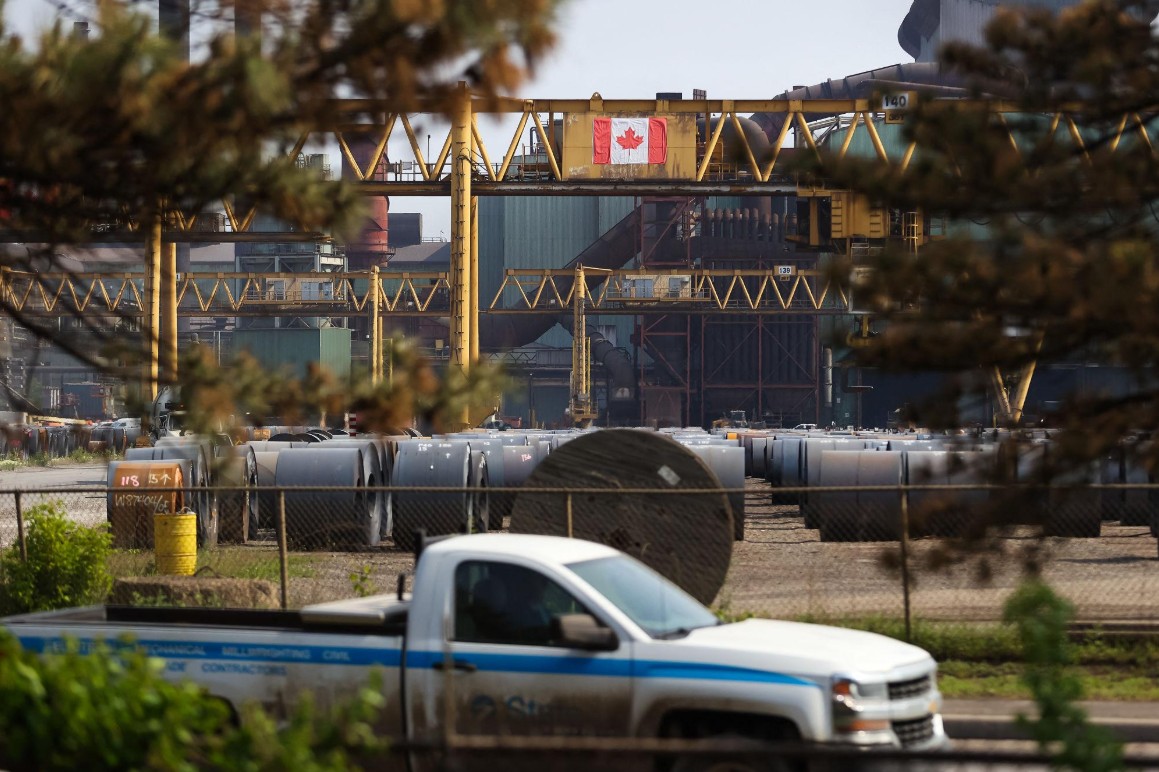
Canadian steelmaker Stelco is moving ahead with plans to lay off hundreds of workers in Ontario despite warnings of possible legal action from the federal government, deepening a dispute over employment commitments made when the company was acquired by U.S.-based Cleveland-Cliffs in 2024.
The company plans to cut up to 500 positions as it suspends finishing operations at its Hamilton Works facility. Union representatives expect approximately 330 layoffs in Hamilton and another 40 to 50 at Lake Erie Works in Nanticoke, alongside reductions affecting cooperative education positions.
In a seven-page letter to Industry Minister Mélanie Joly, Stelco president Paul Simon defended the decision, citing declining demand, American tariffs and competition from imported steel.
According to figures provided by the company, Canadian exports of cold-rolled and coated steel to the United States fell by 58 percent compared with levels recorded before the current trade dispute.
Simon also said imports accounted for 45 percent of Canadian demand for those products, while domestic demand had declined by approximately 10 percent.
The company argues that maintaining production at Hamilton Works would generate unsustainable financial losses. It intends to preserve the facility in a condition that would allow operations to resume if market conditions improve, although no reopening date has been announced.
Dispute Over Employment Commitments
The federal government maintains that Cleveland-Cliffs remains bound by employment commitments associated with its acquisition of Stelco in 2024.
Ottawa approved the transaction under the Investment Canada Act, subject to undertakings concerning the preservation of unionized positions and most non-unionized jobs for five years.
Joly has warned that changing market conditions do not automatically release the company from those obligations. Government lawyers are reviewing Stelco’s response, with possible enforcement measures still under consideration.
Stelco disputes the government’s interpretation. Simon argues that the commitments do not prohibit temporary layoffs or require employment to remain above a fixed threshold every day throughout the five-year period.
The disagreement has intensified scrutiny of the Canadian government’s ability to enforce employment protections attached to foreign acquisitions.
Trade Pressures on Canadian Steel
The dispute comes amid continued tensions between Canada and the United States over steel tariffs.
American duties of up to 50 percent on certain Canadian steel products have disrupted cross-border trade, while Canadian producers also face competition from imported steel and weakening demand from manufacturers.
Stelco’s owner, Cleveland-Cliffs, has supported stronger North American trade barriers against steel imports from outside the continent.
The Canadian government says it offered financial assistance to help preserve operations and employment, but Stelco maintains that the proposed support would not resolve the underlying shortage of orders.
For workers in Hamilton and Nanticoke, the immediate concern remains the loss of industrial jobs and uncertainty over when production might recover.
The dispute now raises a broader question for Canada’s manufacturing sector: how effectively can governments protect domestic employment when foreign-owned companies face major changes in international trade conditions?