





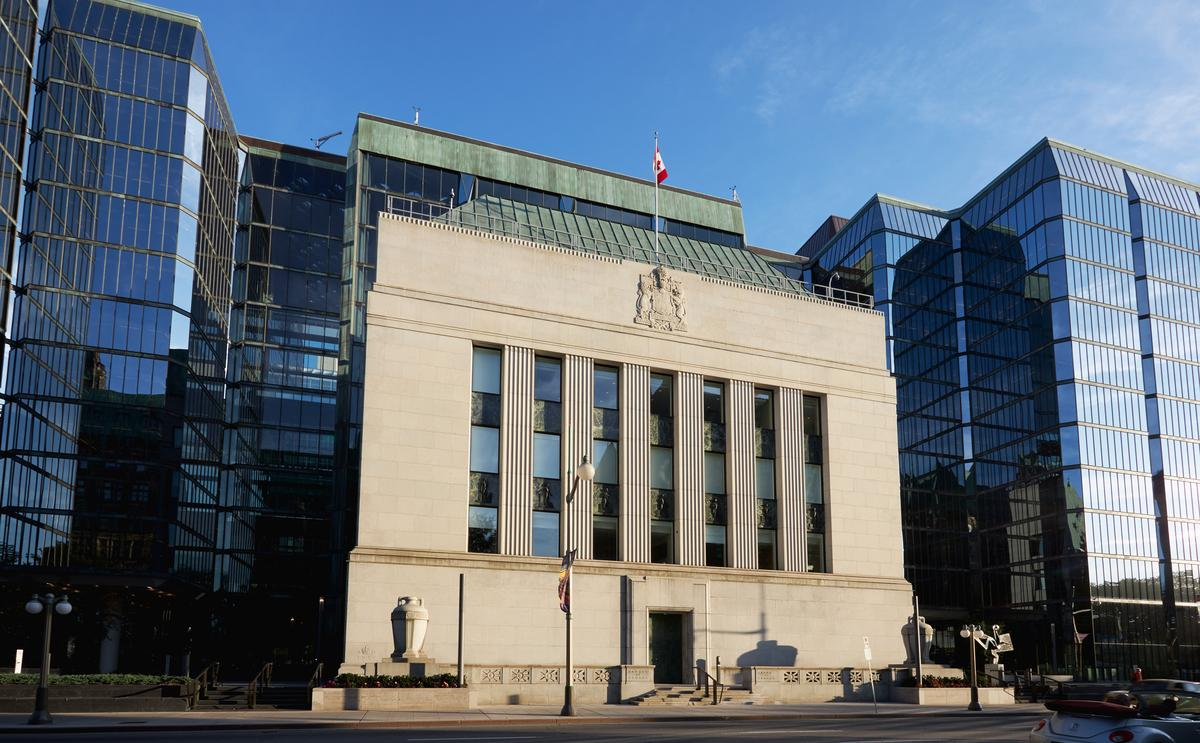
A majority of economists surveyed by Reuters expect the Bank of Canada to raise its benchmark interest rate next week, reflecting renewed concerns about inflation and the direction of monetary policy.
According to a Reuters poll published on October 23, 19 of 34 economists forecast a quarter-percentage-point increase at the central bank’s October 28 meeting, which would bring the policy rate to 2.50%.
The forecast represents economists’ expectations rather than a decision by the Bank of Canada.
The central bank faces a challenging environment in which inflation risks must be weighed against signs of slower economic activity.
Trade uncertainty, imported costs and changes in consumer demand can all influence the inflation outlook.
Higher interest rates can help reduce inflationary pressure by making borrowing more expensive and moderating spending.
However, tighter monetary policy can also affect households carrying variable-rate debt, businesses financing investment and potential homebuyers.
For Canadian consumers, even a modest rate increase can influence mortgage costs, lines of credit and other borrowing products, depending on their terms.
The policy outlook is particularly important for the housing market, where financing costs remain a significant factor in affordability.
Businesses will also be watching the central bank’s assessment of economic growth and investment conditions.
A rate increase could signal that policymakers see inflation as a more immediate concern than weak demand.
A decision to hold rates steady, by contrast, could indicate greater caution about the economy’s capacity to absorb tighter financial conditions.
The Bank of Canada’s October 28 announcement will therefore be closely watched for both the interest-rate decision and its accompanying explanation.
Until then, the Reuters survey should be understood as a measure of market expectations, not an official indication of what the central bank will do.