




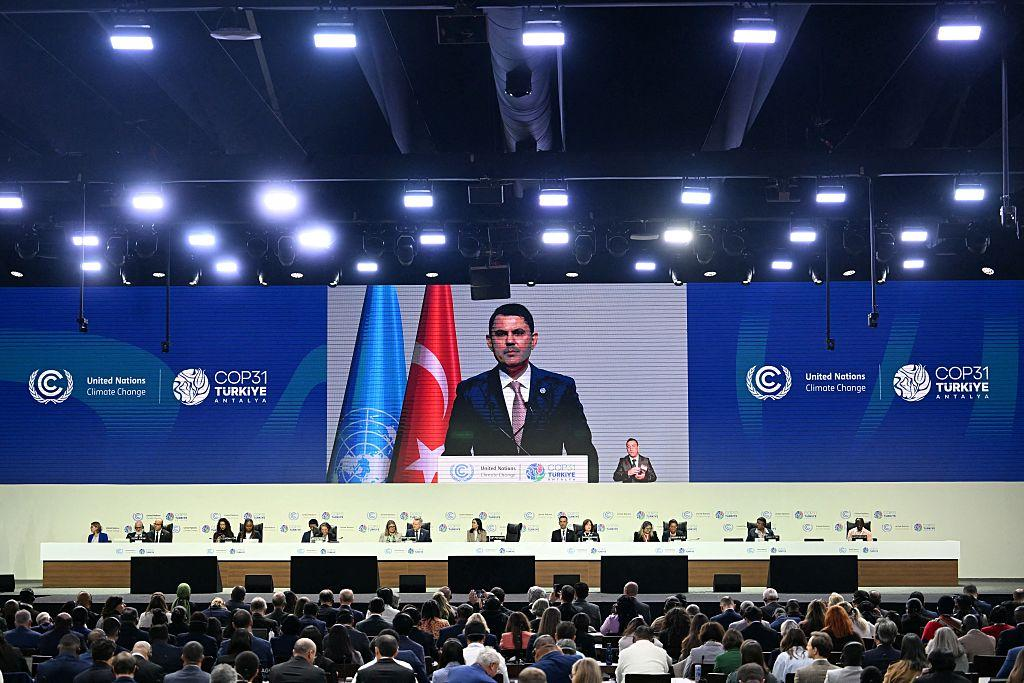
The failure of the COP31 United Nations climate summit to produce an overarching agreement has triggered international criticism, exposing deep divisions between countries demanding stronger action on fossil fuels and governments resisting new commitments.
The conference ended on Sunday, November 22, after negotiations involving more than 190 countries extended two days beyond their scheduled conclusion.
Despite prolonged diplomatic efforts, negotiators could not reach consensus on a final political declaration. The European Union and several climate-vulnerable countries rejected a proposed agreement that failed to explicitly address fossil fuels.
The breakdown marks one of the most significant setbacks in international climate diplomacy since the Copenhagen summit in 2009.
Why the Negotiations Failed
At the centre of the dispute was whether governments should reaffirm and strengthen their commitment to move away from coal, oil and natural gas.
During COP28 in Dubai in 2023, countries agreed to transition away from fossil fuels in energy systems. Three years later, however, negotiators in Antalya remained divided over how to translate that commitment into concrete action.
The European Union and several Pacific island nations argued that a final declaration without explicit language on fossil fuels would represent an unacceptable weakening of international climate ambition.
Saudi Arabia and other oil-producing countries resisted stronger language on transitioning away from fossil fuels, while advocating approaches that include carbon capture technologies.
Negotiators also disagreed over financial assistance to developing countries and the scale of support needed to protect vulnerable populations from increasingly severe climate impacts.
Australia’s Climate Change and Energy Minister Chris Bowen, who led the negotiations, acknowledged that the divisions could not be overcome.
Pacific Nations Express Disappointment
The collapse prompted particularly strong reactions from Pacific island countries, where rising sea levels and extreme weather pose serious long-term threats.
Representatives of vulnerable nations argued that the failure to secure stronger commitments would increase the risks facing communities already experiencing the consequences of global warming.
The Marshall Islands delegation expressed disappointment with the outcome, while Australian opposition politicians called for Bowen’s resignation over his handling of the negotiations.
The controversy has also raised questions about whether the current consensus-based UN climate negotiating process can deliver agreements when major economic interests remain sharply divided.
Not Every Negotiation Failed
Although COP31 ended without an overarching political agreement, the conference did produce progress on several narrower issues.
Countries adopted separate decisions concerning a just transition, including cooperation to support workers and communities affected by the shift toward lower-carbon economies.
Negotiators also advanced discussions on climate adaptation, while voluntary initiatives promoted electrification and clean-energy investment.
These outcomes remain distinct from the political declaration that governments failed to approve.
Importantly, the collapse does not cancel the Paris Agreement or reverse climate commitments adopted at previous UN conferences.
What Happens Next?
Attention is now turning to COP32, scheduled to take place in Addis Ababa, Ethiopia, in 2027.
The next conference will inherit unresolved disputes over fossil fuel dependence, emissions reductions and financial assistance to developing countries.
The failure in Antalya also comes amid growing concern that global temperatures will exceed the Paris Agreement’s 1.5°C threshold, increasing the risks associated with heatwaves, floods, droughts and other extreme weather events.
For international climate diplomacy, the central question is no longer simply whether countries recognize the urgency of climate change, but whether they can agree on the economic and political measures required to address it.
COP31 demonstrated that agreement on the scale of the problem does not necessarily translate into consensus on the solutions.