





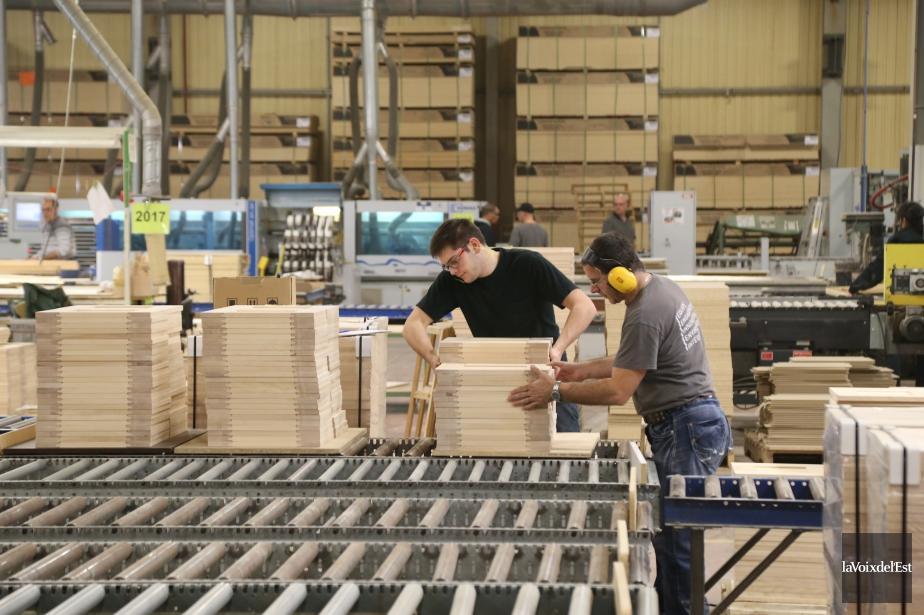
OTTAWA, November 5, 2026 — Canadian kitchen cabinet manufacturers are warning of potential factory closures and further job losses as US tariffs on their products are scheduled to double to 50% in January 2027, intensifying pressure on an industry already struggling with falling exports and cheaper imports.
According to a Reuters report published Thursday, November 5, the industry employs nearly 25,000 people across thousands of mostly small businesses. Manufacturers say the tariffs introduced under President Donald Trump’s administration have already contributed to the loss of more than 10% of the sector’s workforce.
The crisis illustrates how trade tensions between Canada and the United States are affecting smaller manufacturers that depend heavily on cross-border commerce.
Quebec Manufacturer Considers Moving Production
Cabico, one of Canada’s major kitchen cabinet manufacturers, is considering shifting some production to the United States to preserve access to its largest market.
Before the introduction of the tariffs, the Quebec-based company exported approximately 90% of its products to American customers.
Since then, its US shipments have declined by 25% compared with 2024 levels.
The company has also laid off more than a quarter of its 700 employees, despite investing approximately C$30 million over five years to expand and modernize production facilities in Quebec and Ontario.
Founder Alain Ouzilleau told Reuters that the prospect of higher tariffs was forcing the company to consider manufacturing arrangements in the United States.
Such a move could protect some commercial relationships but would also highlight the risk of industrial activity moving away from Canada.
Smaller Companies Under Growing Pressure
Other Canadian manufacturers are facing similar difficulties.
Ontario-based Muskoka Cabinet Company has reduced its workforce by 40%, moved to a three-day working week and suspended investment.
Its president, Luke Elias, who also leads the Canadian Kitchen Cabinet Association, warned that many companies could close if the US tariff increases to 50%.
Meanwhile, Manitoba-based Decor Cabinet Company has absorbed part of the tariff costs to maintain relationships with American customers.
The strategy has reduced profit margins, while the company has relied on a federal work-sharing program to retain skilled employees by reducing working hours.
Competition From Imports Adds to the Crisis
Canadian cabinet manufacturers are also facing pressure from lower-priced imported products.
Industry representatives say competition from Chinese imports has weakened domestic prices and left some factories operating at just over half the production capacity they maintained three years ago.
In July, Canada introduced a temporary 25% surtax on certain imported wooden cabinets and vanities while authorities investigated whether increased imports were harming domestic producers.
The Canadian International Trade Tribunal is expected to complete its inquiry on January 15, 2027.
Manufacturers argue that the temporary measure has not provided sufficient protection and are calling for stronger action.
Trade Uncertainty Threatens Canadian Jobs
The kitchen cabinet industry is part of a wider group of Canadian manufacturing sectors affected by American trade restrictions, alongside steel, aluminum and automotive production.
Unlike larger industries, cabinet manufacturing is fragmented among numerous smaller companies, making it especially vulnerable to declining orders and rising costs.
The planned tariff increase on January 1 could further reduce Canadian manufacturers’ competitiveness in the American market.
With trade negotiations between Ottawa and Washington facing continued uncertainty, companies must decide whether to reduce production, seek alternative markets or move operations across the border.
For Canadian workers and communities dependent on manufacturing, the consequences could extend well beyond the kitchen cabinet industry.