




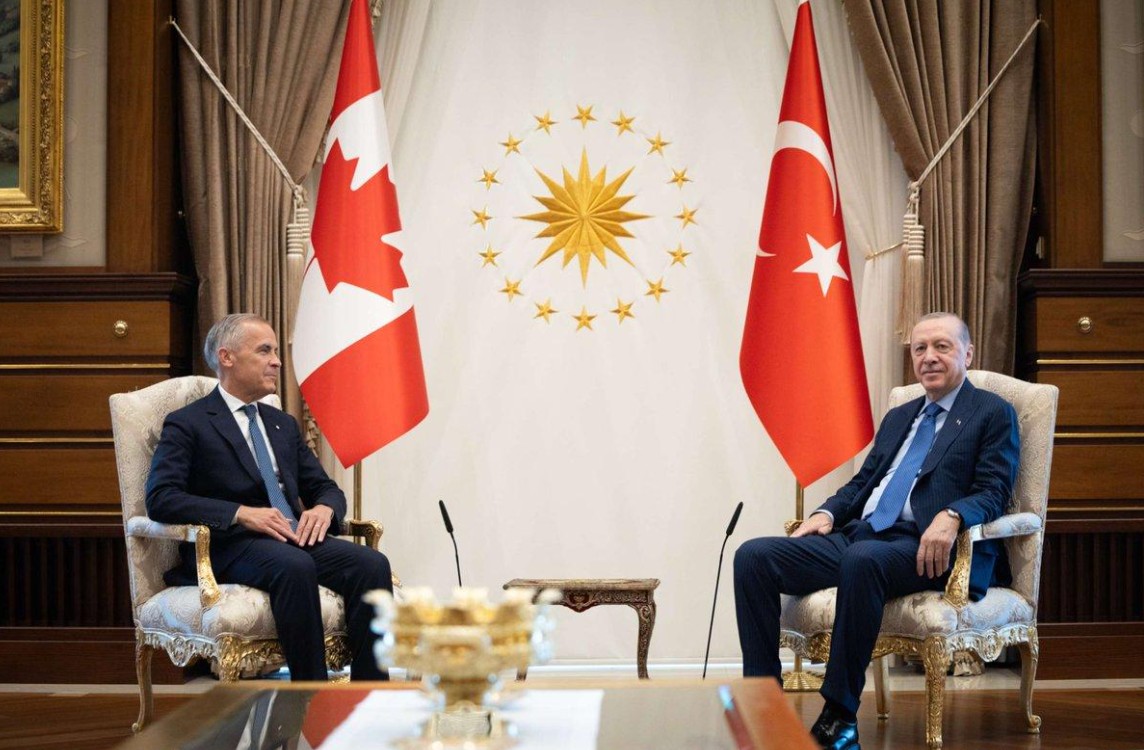
Canada and Turkey are preparing to strengthen their economic and strategic relationship as Prime Minister Mark Carney visits Ankara and Istanbul this week, with defence cooperation, nuclear energy and trade diversification at the centre of discussions.
According to Reuters, citing a person familiar with the plans, the two NATO allies are expected to sign a joint declaration covering defence, energy, economic cooperation and diplomatic relations. The proposed agreement would establish working committees to develop action plans, although major commercial and defence contracts are not expected to be concluded immediately.
Carney’s visit, scheduled for October 21–24, marks the first dedicated bilateral trip to Turkey by a Canadian prime minister. He is expected to meet President Recep Tayyip Erdoğan in Ankara on Thursday before holding discussions with Turkish business leaders in Istanbul on Friday.
The diplomatic initiative comes as Ottawa seeks to reduce its economic dependence on the United States and develop stronger relationships with other international partners.
Trade Diversification Becomes a Strategic Priority
Canada’s relationship with the United States remains central to its economy, but recent trade disputes have reinforced the importance of expanding commercial opportunities elsewhere.
Turkey offers a potentially significant partner because of its industrial capabilities, growing defence sector and strategic position between Europe, Asia and the Middle East.
According to the Canadian government, bilateral merchandise trade reached $4.3 billion in 2025, including $1.1 billion in Canadian exports and $3.2 billion in imports from Turkey.
Trade between the two countries has increased by almost 50% over the past five years.
The two governments launched negotiations toward a comprehensive free trade agreement earlier this year, and the upcoming discussions could provide fresh political momentum to that process.
For Canadian exporters, closer ties could create opportunities in energy, aerospace, agriculture, advanced technologies and critical minerals.
However, expanding bilateral trade will require more than political commitments. Businesses will need predictable regulations, competitive transportation costs and commercially viable investment opportunities.
Nuclear Energy and LNG on the Agenda
Energy cooperation is expected to be one of the most important elements of Carney’s visit.
Turkey is expanding its energy infrastructure and exploring additional nuclear power projects as it seeks to meet growing electricity demand and diversify its energy supplies.
One possibility under discussion involves Canadian nuclear technology.
According to Reuters, a working group is expected to examine the feasibility of a proposal involving CANDU technology for a planned nuclear power plant on Turkey’s Black Sea coast.
The Canadian technology is associated with AtkinsRéalis, which owns the CANDU business.
Turkey has also explored nuclear cooperation with companies from South Korea and China, meaning any Canadian proposal would face international competition.
Liquefied natural gas could provide another area of cooperation.
Turkish officials are interested in potential Canadian LNG supplies, although the commercial feasibility of such exports would depend on infrastructure, transportation costs and long-term purchasing arrangements.
The discussions could therefore open new opportunities for Canadian energy companies without guaranteeing immediate investment decisions.
Defence Cooperation After Years of Tension
Defence is another sensitive but potentially important area of the emerging partnership.
Canada and Turkey are both NATO members, yet their bilateral defence relationship has experienced difficulties over military export restrictions.
In 2024, Canada eased restrictions on certain defence exports to Turkey, including technologies associated with unmanned aerial vehicles.
That decision helped create conditions for renewed industrial dialogue.
The latest discussions are expected to include drones, naval systems and opportunities for cooperation between defence manufacturers.
Turkey has developed a substantial defence industry, particularly in unmanned aircraft, while Canada possesses expertise in aerospace, advanced manufacturing and specialized technologies.
Closer cooperation could support joint industrial projects and strengthen supply chains within NATO.
Nevertheless, the development of major defence agreements will depend on commercial negotiations, export regulations and broader strategic considerations.
Why the Partnership Matters for Canada
Carney’s diplomatic initiative reflects a broader shift in Canada’s approach to international economic relations.
The objective is not to replace the United States as Canada’s principal trading partner, an unrealistic prospect given the scale of existing economic integration.
Instead, Ottawa is seeking to reduce the risks associated with excessive dependence on a single market.
Turkey’s importance lies in the combination of its economic potential, industrial capacity and regional influence.
For Canada, stronger engagement with Ankara could expand access to markets and investment opportunities beyond North America.
For Turkey, closer relations could provide access to Canadian energy resources, nuclear technology and advanced industrial expertise.
Both countries also share an interest in strengthening cooperation within NATO during a period of international uncertainty.
From Diplomatic Declaration to Concrete Projects
The expected joint declaration would represent a political commitment rather than a completed package of commercial agreements.
Its practical significance will depend on the ability of the proposed working committees to produce specific projects and measurable results.
Progress in free trade negotiations, nuclear energy cooperation, LNG discussions and defence partnerships will provide the clearest indicators of whether the relationship is entering a new phase.
Carney’s visit could therefore mark an important diplomatic opening, but the longer-term test will be whether Canada and Turkey can turn strategic ambitions into sustained investment, trade and industrial cooperation.